Don't let busy solo living compromise your health. Discover easy, nutritious chestnut recipes you can make at home. From simple boiling methods to delicious lattes and smart storage tips, perfect for healthy snacking.

H2. Craving Wholesome Snacks in a Hectic Solo Lifestyle
Living independently offers freedom, but it often comes with the challenge of maintaining healthy eating habits. Relying heavily on takeout or instant meals can leave you feeling drained, both physically and mentally. If you're searching for a simple, satisfying snack that's kind to your body, whether it's for a late-night craving or an afternoon pick-me-up, chestnuts are a fantastic natural choice. Forget complex cooking; from straightforward boiling methods to creamy chestnut lattes, we'll guide you through nutritious, easy-to-make chestnut dishes perfectly suited for the busy solo dweller.
H2. Overcoming Prep Hurdles and Snack Failures for Healthier Choices
The desire to prepare your own healthy snacks is great, but the reality can feel daunting. Natural ingredients like chestnuts often require specific preparation and cooking times, leading to disappointing results – overly hard, undercooked, or just plain difficult to eat. Who hasn't struggled with scoring chestnuts, damaging the meat, or finding the shells stubbornly attached after cooking? For busy individuals living alone, such experiences can be more frustrating than rewarding. It often feels like a lack of time and culinary skill is the culprit. However, with just a few key tips, these common snack preparation challenges can be easily conquered, making healthy eating accessible.
※ This post contains affiliate links. I may earn a commission at no extra cost to you.

H2. Effortless Chestnut Cooking: Mastering Boiling and Roasting Techniques
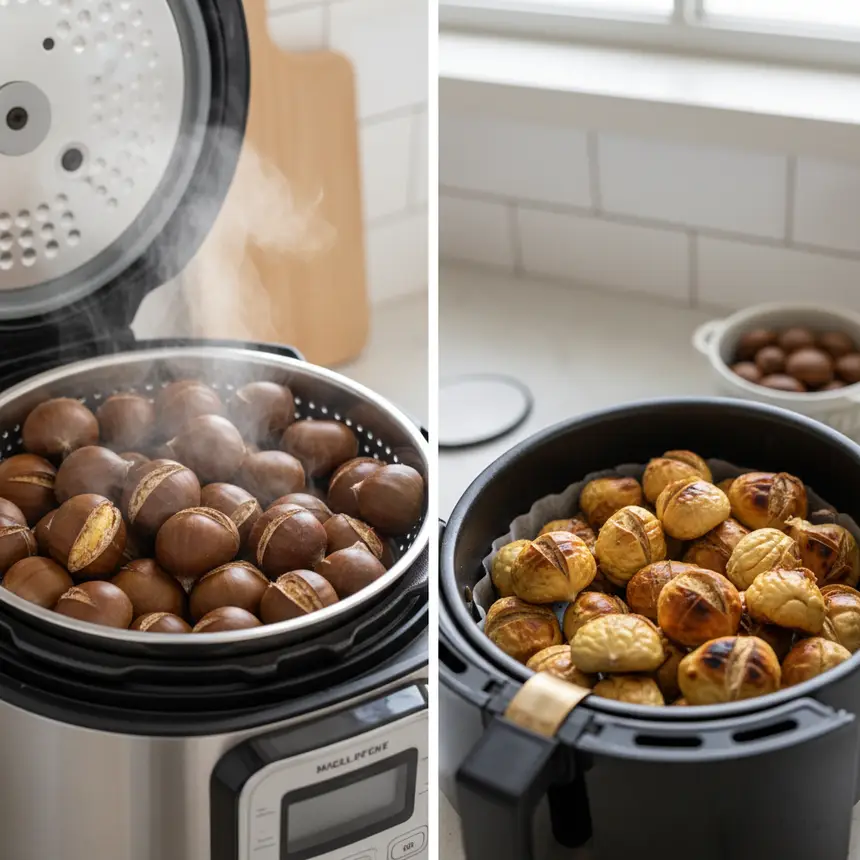
Enjoying delicious chestnuts through boiling or roasting is simpler than you might think. The initial step for any chestnut dish is thorough washing. Soaking them in water for about 30 minutes significantly eases the peeling or scoring process and helps maintain their moisture for a tender result.
Boiled chestnuts offer a subtle sweetness and tender texture, while roasted ones provide a nutty, slightly fluffy bite. Choose your preference or enjoy both! Cooked chestnuts can be stored in an airtight container in the refrigerator for several days, making them a convenient grab-and-go snack for your busy schedule.
- Pressure Cooker Boiling Method: Place cleaned chestnuts in a steamer basket. Cook on high heat until the pressure indicator vigorously wiggles, then reduce heat to low and cook for 5 minutes. Turn off the heat and let them steam for an additional 10 minutes. This ensures perfectly soft and moist chestnuts.
- Air Fryer Roasting Method: After washing and scoring the chestnuts, place them in the air fryer basket. Cook at 350°F (180°C) for 15-20 minutes, flipping them halfway through for even cooking. Adjust timing based on chestnut size and your appliance model.
Boiled chestnuts offer a subtle sweetness and tender texture, while roasted ones provide a nutty, slightly fluffy bite. Choose your preference or enjoy both! Cooked chestnuts can be stored in an airtight container in the refrigerator for several days, making them a convenient grab-and-go snack for your busy schedule.
H2. Elevating Your Home Cafe: The Delightful Chestnut Latte Recipe
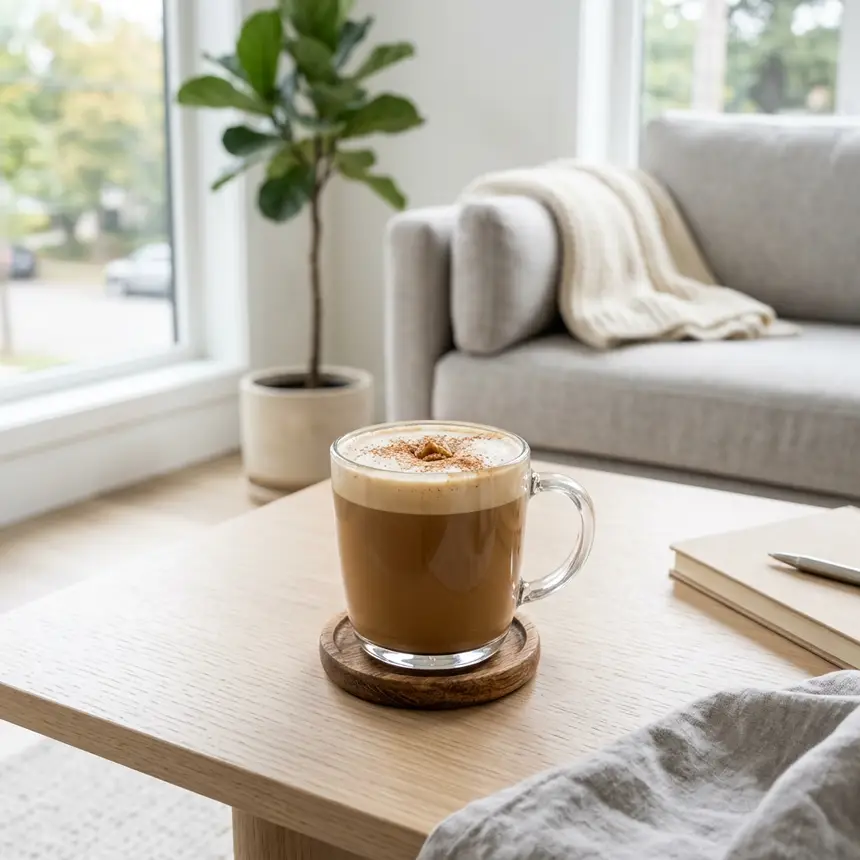
While delicious on their own, chestnuts can be transformed into an elegant home cafe beverage with minimal effort. A chestnut latte, with its smooth texture and rich, nutty flavor, offers comforting warmth on a chilly day.
Beyond lattes, you can mash chestnuts and use them as a spread, chop them to add to salads, or even incorporate them into bread dough for a unique flavor. These small culinary experiments can significantly enhance the variety and nutritional value of your daily meals.
- Simple Chestnut Latte Recipe: Combine about 1/4 cup (approximately 50g, adjust to taste) of cooked chestnuts, 1 cup (200ml) of warm milk, and 1 tablespoon of honey (optional) in a blender. Blend until smooth. For an added cafe touch, sprinkle with cinnamon or top with frothed milk. Opting for natural sweeteners like honey or stevia over refined sugar keeps it a healthier treat.
Beyond lattes, you can mash chestnuts and use them as a spread, chop them to add to salads, or even incorporate them into bread dough for a unique flavor. These small culinary experiments can significantly enhance the variety and nutritional value of your daily meals.
H2. Your Solo Living Health Ally: Building Healthy Habits with Chestnuts
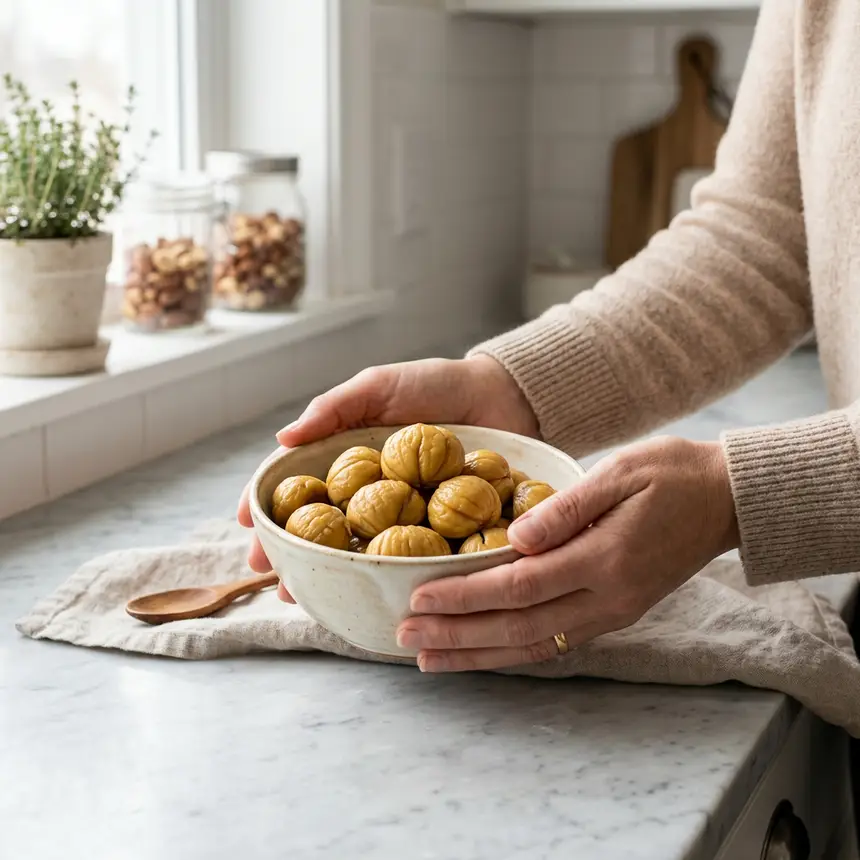
Prioritizing health amidst a busy solo life can feel like an uphill battle. However, with a bit of effort and the right knowledge, preparing nutritious and delicious snacks at home becomes an achievable goal. Chestnuts are packed with carbohydrates, vitamins, and minerals, providing sustained energy and satiety, which can help curb cravings for less healthy options. Why not start a new healthy snack routine today with the chestnut recipes we've shared? It might seem a little effortful at first, but with practice, you'll quickly find yourself whipping up wholesome snacks with ease. Fueling your day with nutritious choices will undoubtedly bring more vitality to your independent living journey.
Frequently Asked Questions
Q. Is soaking chestnuts before cooking really necessary?
A. While not strictly mandatory, soaking chestnuts in water for about 30 minutes makes them significantly easier to peel or score. It also helps them cook more tenderly, contributing to a more pleasant eating experience.
Q. How can I tell if chestnuts are fully cooked?
A. For boiled chestnuts, gently pierce one with a fork or toothpick; if it slides in easily, they're done. Roasted chestnuts are usually ready when their shells slightly split open and the inner flesh turns a lovely golden yellow.
Q. What's the best way to store cooked chestnuts to keep them fresh?
A. Once cooked chestnuts have cooled completely, store them in an airtight container or freezer bag in the refrigerator for 3-4 days. For longer storage, peel them and freeze. They can be reheated in the microwave or a steamer.
Q. Can I make roasted chestnuts in a regular oven instead of an air fryer?
A. Yes, absolutely. Preheat your oven to 350-400°F (180-200°C). Place scored chestnuts on a baking sheet and roast for 20-30 minutes, flipping once or twice. Cooking times and temperatures may vary slightly depending on your oven.
Q. Besides lattes, what other healthy snacks can I make with chestnuts?
A. You can mash cooked chestnuts with a little honey to create a spread, or chop them to use as a topping for yogurt or cereal. They also work wonderfully mashed into salads as a starchy component, or even mixed into pancake or muffin batter before baking.