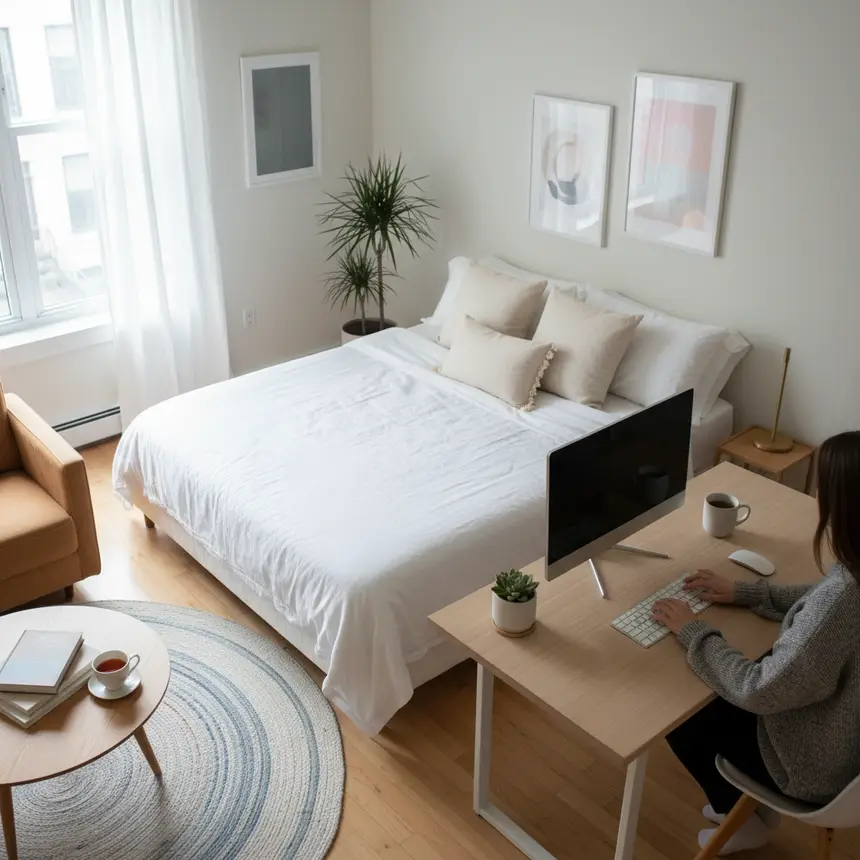
Busy with solo living and want to save both time and money? Discover how to create your own comfortable space with efficient home management.
From real-life solo living scenarios to actionable routines and budget tips, we provide information to upgrade your single life.

H2: The Endless Chore Dilemma for Busy Solo Dwellers
Many living alone will recognize this common scene: weekdays are consumed by work or studies, leading to postponed chores. The weekend arrives, only to be met with piles of laundry, dirty dishes, and a messy room, eliciting a sigh. You crave a moment of peace, but the backlog of household tasks holds you captive, making true relaxation elusive. Questions like, 'Am I the only one living in such a whirlwind?' or 'How do others maintain a tidy home and still have leisure time?' often arise. This dilemma is akin to deciding whether to have breakfast at the hotel or venture out during a trip. It's more than a simple choice; it involves weighing crucial values like 'convenience,' 'cost,' and 'time.' Solo living is filled with small daily decisions that collectively shape your overall quality of life. Efficient home management isn't just about keeping a tidy space; it's a key to saving precious time and energy, ultimately enhancing life satisfaction.

H2: Establishing Your Value Criteria: The First Step to Efficient Living
To live efficiently as a solo dweller, it's crucial to clearly define your personal 'value criteria.' This concept encompasses not just visible costs, but also your time and mental energy. For instance, when preparing meals, is cooking from scratch always the best option? Sometimes, ready-made meals or meal kits can save valuable time, allowing you to focus on more important tasks. Beyond comparing the cost of eating out versus ingredients for home cooking, you should also consider the time saved and psychological satisfaction each method brings. Calculate the time spent on specific household chores and evaluate if investing in tools or services to save that time would be beneficial in the long run. For example, if a specific cleaning tool costs $5 a month and saves you 30 minutes of cleaning time each week, that's 2 hours saved per month. If the value of those 2 hours significantly outweighs $5, it's a wise investment. Even small savings accumulate substantially; for instance, by canceling unnecessary subscriptions or adopting energy-saving habits, it's entirely possible to save 5-10% on your monthly living expenses. The key is to decide which factors to prioritize based on your lifestyle. - Regularly record and review unnecessary expenses and time-consuming elements to find your optimal balance.
※ This post contains affiliate links. I may earn a commission at no extra cost to you.


H2: Maximum Impact with Minimum Effort: Actionable Home Routines
For a busy solo dweller, elaborate deep cleaning or perfect organization can be more of a stressor than a solution. Instead, creating 'mini-routines' that naturally integrate into your daily life can be highly effective. This might involve making your bed every morning, doing dishes immediately after dinner, or spending 10 minutes before bed returning misplaced items to their proper places. These small actions collectively prevent your home from becoming overly messy. For example, a 10-minute daily tidying habit can prevent the need for a 2-hour-plus major clean on the weekend. This equates to investing 70 minutes a week to reclaim precious weekend hours. You can also plan on a weekly basis; for instance, designating 'Wednesday as laundry day' or 'Saturday morning for bathroom cleaning' makes maintaining routines much easier. This approach ensures that consistent daily management helps maintain a clean environment without significant burden. Just like scheduling meals, allocating specific times for household tasks can create a system where home management becomes a natural part of your daily routine. - Start with small, manageable home routines that you can consistently practice, then gradually expand them.

H2: Crafting Your Comfortable Solo Space at Your Own Pace
Solo living offers independence and freedom but also the responsibility of managing everything yourself. Instead of striving for perfection from the outset, it's important to view it as a process of discovering your optimal living system at your own pace and in your own way. What works for others might not suit you, and what succeeds today might not work tomorrow. The key is to be flexible, adapt to your current situation and values, and continuously seek improvements. Sometimes, paying a little extra to save time can be a smart choice, while other times, investing your own effort to save money might bring greater satisfaction. Ultimately, the goal of efficient solo living management isn't just a tidy space, but the peace and relaxation we can enjoy within that space. May your precious daily life be filled with comfort, not stress. Start by changing a small part of your day right now; you're sure to experience positive changes.
Frequently Asked Questions
Q. What are the best solo living tips for busy professionals to save time on chores?
A. Implementing 'mini-cleaning' habits of 10-15 minutes daily is highly effective. For example, doing dishes right after dinner or putting away items before bed. This is far less burdensome than weekend deep cleans and helps maintain a consistently tidy environment.
Q. What should I consider for efficient budget management in solo living?
A. Focus on 'value spending' rather than just cutting expenses. For instance, when deciding on meal options, calculate the time saved by using meal kits or ready-made meals versus cooking from scratch, considering both monetary and time/mental costs. Reviewing unnecessary subscriptions is also a good practice.
Q. Do you have tips for maximizing space in a small apartment?
A. Utilizing vertical space is crucial. Use wall-mounted shelves, vertical storage units, and multi-functional furniture to minimize floor space. Decluttering unnecessary items to create more open space is also very important.
Q. What should I do when solo living chores feel overwhelming?
A. Instead of aiming for perfection, try prioritizing. Address the tasks that cause the most stress first, or tackle immediate needs. Sometimes, utilizing external services (e.g., laundromats, meal delivery) can be a smart choice. The key is managing your own stress levels.