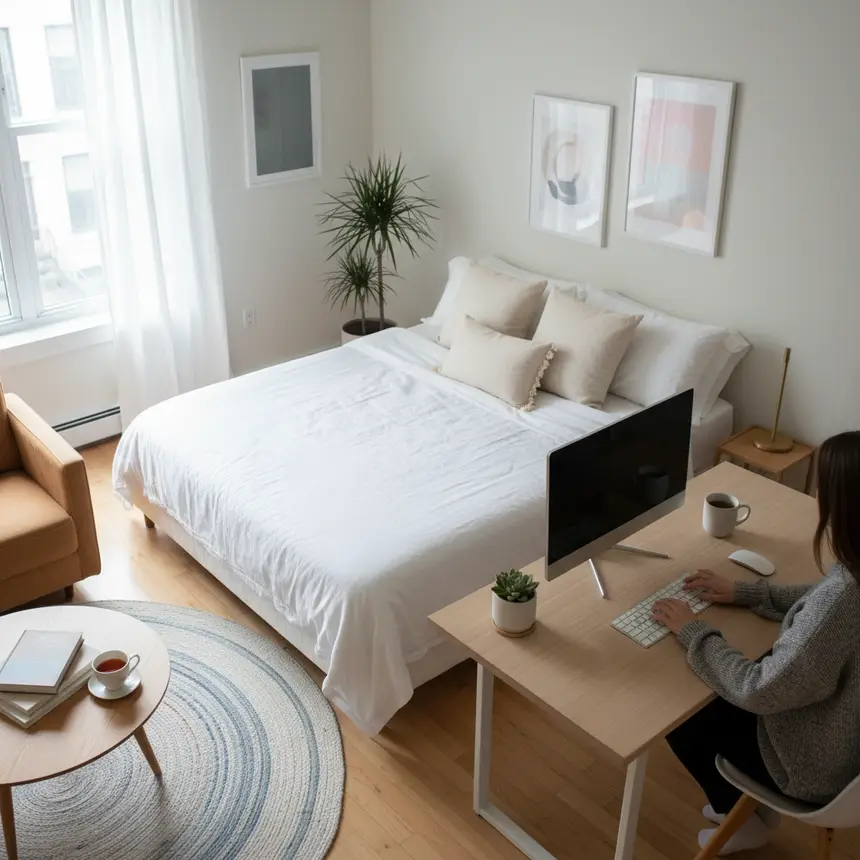
Feeling overwhelmed by solo living? Discover how to save time and energy by changing your perspective to 'see' your space, rather than just endlessly cleaning. Achieve efficient organization and smart space utilization for a more relaxed independent life.

H2. The Dream of Solo Living Meets Reality's Clutter
The idea of living independently often starts with a romanticized vision: a cozy space, complete freedom, and seamless routines. However, the reality of managing your own household can quickly transform that dream into a daunting task. For many, especially those new to living alone, even simple chores like tidying up or doing laundry can feel overwhelming. It’s similar to how some students easily grasp middle school concepts but struggle when high school subjects introduce more complex problem-solving. We often find ourselves asking, 'Where do I even begin?' when faced with a mountain of tasks. Merely putting in effort to clean and organize doesn't always yield lasting results, leading to frustration, accumulated clutter, and a sense of never truly getting ahead.

H2. The Endless Cycle of Tidying: Why Are We Always Short on Time and Energy?
A common challenge for anyone living alone is the persistent feeling of 'not enough time' and 'wasted effort.' You start a cleaning spree with good intentions, only to find it takes longer than expected, or worse, the mess returns almost immediately. Losing items, buying duplicates, or accumulating storage solutions that only add to the chaos are familiar struggles. This isn't usually due to a lack of diligence or speed. Instead, it often stems from diving straight into tasks without a clear understanding of the space's overall flow or the natural home for each item. It's like trying to solve a complex puzzle by randomly moving pieces instead of first understanding the bigger picture. This impulsive approach leads to repetitive work, mental fatigue, and a never-ending battle against disorganization.
※ This post contains affiliate links. I may earn a commission at no extra cost to you.


H2. The Power of 'Visualizing Your Space': Your First Step to Efficient Home Management
How can we break free from this cycle and enjoy a more serene solo living experience? The key lies in developing the ability to 'visually understand your space.' Just as a complex problem becomes clearer when depicted through a diagram, viewing your living area and its contents as an interconnected system can be revolutionary. Instead of just moving things around, practice 'visualizing' where each item would best reside for efficiency and convenience. Imagine your apartment as a blueprint, mapping out the function of each area and the optimal placement for your belongings. This mental exercise helps eliminate unnecessary actions, clarifies storage solutions, and significantly reduces the mental load associated with tidying up. It's about seeing the solution before you even begin the physical work.

H2. Practical Steps: Building Your Own Efficient Space Management System
Now, let's put the power of 'visualizing your space' into action. Follow these three steps to create your own efficient home management system:
- 1. Take an Item Inventory: Begin by accurately assessing every item you own. Group them by category—clothing, kitchenware, books, etc. This is also the perfect time to declutter ruthlessly, letting go of anything you no longer use or need. Think of it as erasing unnecessary lines before drawing your masterpiece.
- 2. Visualize Your Zone Segments: Divide your room into functional zones: a sleeping area, a workspace, a relaxation spot, and so on. Envision what items belong in each zone and plan storage accordingly. For example, pajamas near the bed, frequently read books on a bedside shelf. This process is like drawing boundaries on a map, clearly defining the purpose of each area.
- 3. Optimize Your Flow Pathways: Imagine your most common movements within your home—from the entryway to the kitchen, or from the bed to your desk. Check if any items obstruct these paths or if essentials are not within easy reach. Arrange your space to support natural, fluid movement, much like designing a clear river path for water to flow unimpeded.

H2. Transforming Your Home: From Chaos to Your Personal Gallery
Stop viewing home management as a burdensome chore. By focusing on understanding the overall picture before tackling individual tasks, you'll discover surprisingly simple solutions. Cultivating the habit of 'visualizing your space' allows you to build a personalized organization system that aligns with your lifestyle, significantly cutting down the time and energy spent on tidying. This newfound efficiency translates into more relaxed evenings, a calmer mind, and the psychological comfort of a pristine living environment. The moment your once-cluttered space transforms into a well-curated personal gallery, you'll truly savor the joys of independent living. Start small, visualize the perfect state for just one corner of your room, and begin your journey to a more serene home.
Frequently Asked Questions
Q. My small apartment feels impossible to organize. Will visualizing my space really help?
A. Absolutely! Visualizing is even more crucial in small spaces. To efficiently arrange items in limited square footage, clearly defining the purpose of each area and the location of every item is essential. Mentally dividing your space into zones and considering vertical storage options can significantly boost your actual storage capacity.
Q. I always give up halfway through organizing. How can I stay consistent?
A. Instead of aiming for perfection all at once, start with small, achievable goals. For instance, 'Today, I'll only organize my desk' or 'I'll just put away the shoes by the entrance.' Setting specific, minor goals and celebrating their completion helps build momentum and consistency. Use visualization for the big picture, but tackle the execution in small steps.
Q. I tend to buy a lot of things. Does this affect space management?
A. Definitely. Unnecessary purchases lead to inefficient use of space and make organizing much harder. Before buying an item, visualize where it will go in your home. If there isn't a clear, suitable spot, reconsider the purchase. This habit can greatly improve your space management.
Q. How long does it take to establish new organizing habits?
A. It varies for individuals, but typically, forming a new habit takes anywhere from 21 to 66 days. The key is to be patient and consistently practice small actions every day. As you visualize your space and repeat small organizing tasks, efficient home management will gradually become second nature.