Securing housing for solo living or as newlyweds can be challenging. This guide offers practical advice from budget planning and efficient space utilization to smart moving preparations for a stable home.

Starting Fresh: Navigating Housing Costs for Your First Solo Pad or Newlywed Home
Embarking on independent living or setting up a new home with your partner is an exciting chapter, yet it often comes with a significant financial reality check – housing expenses. Many first-time renters find themselves at a crossroads, pondering the best balance between a security deposit and monthly rent. For instance, you might encounter options where a mid-$200,000s deposit leads to a monthly rent in the high $800s. Alternatively, increasing that deposit to the low $300,000s could drastically cut your monthly rent to the mid-$300s. On the flip side, minimizing your initial outlay to a deposit in the low $30,000s might push your rent well over $1,400 per month. Finding the sweet spot between upfront investment and recurring monthly costs is crucial for building a stable solo life or newlywed household. It’s essential to thoroughly understand your financial situation and spending habits to devise the most efficient long-term expenditure plan.

Crafting Your Housing Budget: Finding the Deposit-Rent Sweet Spot
Managing housing costs extends beyond mere numbers; it directly impacts your quality of life. Opting to increase your security deposit to lower monthly rent can be a highly effective strategy, freeing up more disposable income. If you have substantial savings or access to low-interest loans, prioritizing a higher deposit to reduce your monthly rent burden is worth serious consideration. However, if accumulating a large upfront sum is challenging, a lower deposit with higher monthly rent might be the only viable option. In this scenario, it's vital to ensure that the increased rent doesn't exceed a reasonable percentage of your monthly income (e.g., under 30%). Organize your projected housing costs in a spreadsheet, compare total expenses for different scenarios, and clearly identify what's affordable relative to your monthly income. Additionally, factor in key dates like lease expiration or move-in dates to prevent any financial gaps during your housing transition.
※ This post contains affiliate links. I may earn a commission at no extra cost to you.


Smart Living Habits: Maximizing Space for Solo Dwellers and Newlyweds
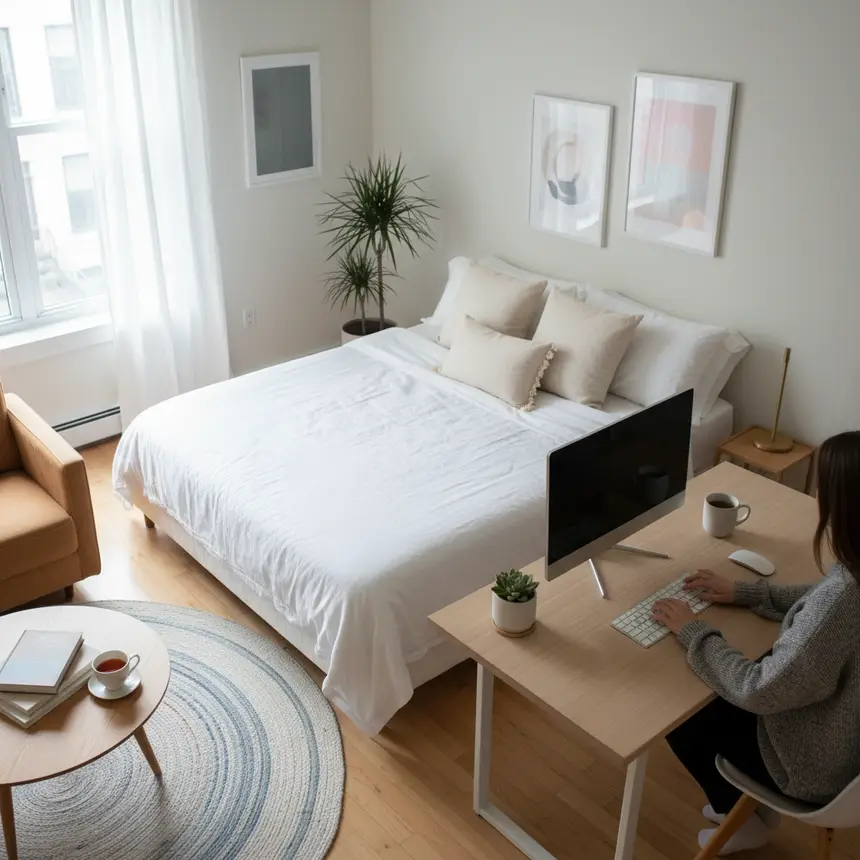
Even in a compact living space, there are countless ways to create a comfortable and expansive feel. The key lies in efficient space utilization and consistent organizational habits. Start with strategic furniture placement. Consider multi-functional pieces like sofa beds that convert from seating to sleeping, or bed frames with integrated storage. Vertical storage is a game-changer for small spaces; wall-mounted shelves or tall bookcases can free up floor space, storing numerous items without cluttering your view. Place frequently used items within easy reach according to your daily flow, and store less common items in deeper storage or bins to minimize visual chaos. Dedicate a specific day each week to decluttering and discarding unnecessary items. These small, consistent efforts collectively transform even the smallest areas into highly functional and spacious environments.

Your Roadmap to a Stable Home: Making Informed Housing Choices
Securing housing, whether for solo living or as a newlywed couple, is more than just finding a place; it's about building the foundation of your life. A well-structured roadmap is essential for establishing a stable home. First, clearly assess your current financial status and future plans (e.g., starting a family, remote work needs) to determine the most suitable housing type. For instance, if you plan to have children, you might consider layouts with ample storage or potential for expansion, even if the initial space is small. Second, find the right balance between the security deposit and monthly rent. Don't just focus on the lowest rent or deposit; consider your overall cash flow and long-term financial commitments. Third, meticulously align your move-in date with your current lease expiration to avoid any housing gaps. Finally, familiarize yourself with necessary paperwork and application procedures in advance to ensure a smooth process. While this preparation might seem daunting, tackling it step by step will help you successfully create your cozy and secure sanctuary.
Frequently Asked Questions
Q. What's the first step for solo dwellers or newlyweds to reduce housing costs?
A. First, determine your affordable housing budget by understanding your monthly income and expenses. Then, compare various deposit and rent combinations to choose the option that best suits your financial situation.
Q. What should be considered for efficient living in a small space?
A. Maximize storage by utilizing vertical space with wall-mounted units and investing in multi-functional furniture. Regularly declutter and clean to keep the space tidy and organized.
Q. What are essential schedule management tips when planning a move?
A. Crucially, align your current lease end date with your new move-in date to avoid any gaps. Also, mark key moving tasks like change of address, booking movers, and planning furniture layout on a calendar in advance.