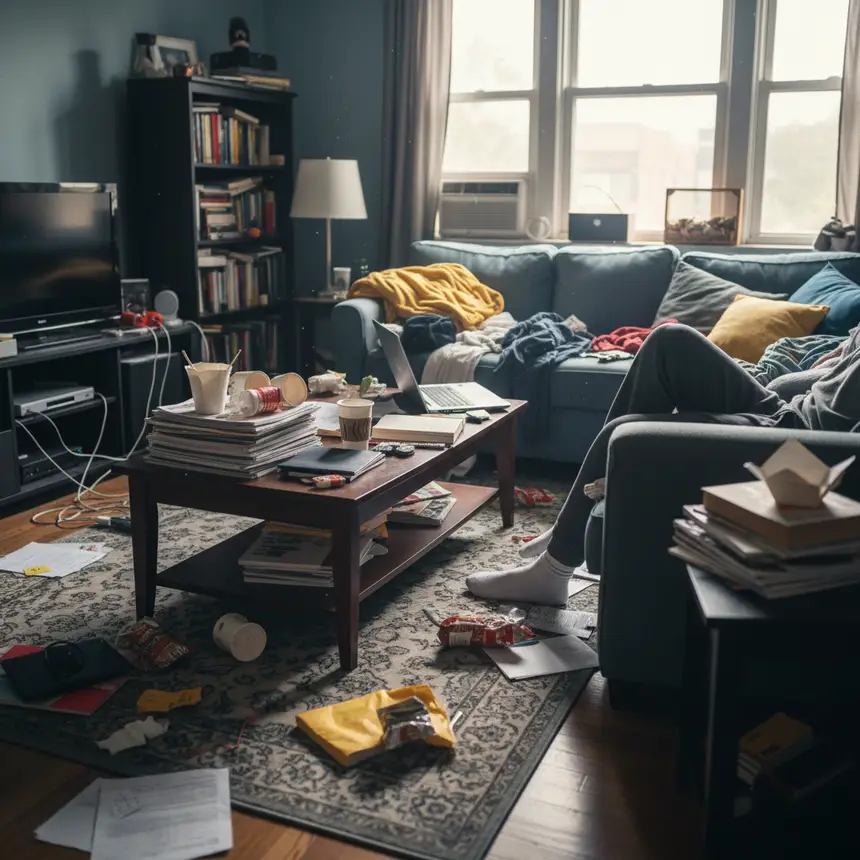
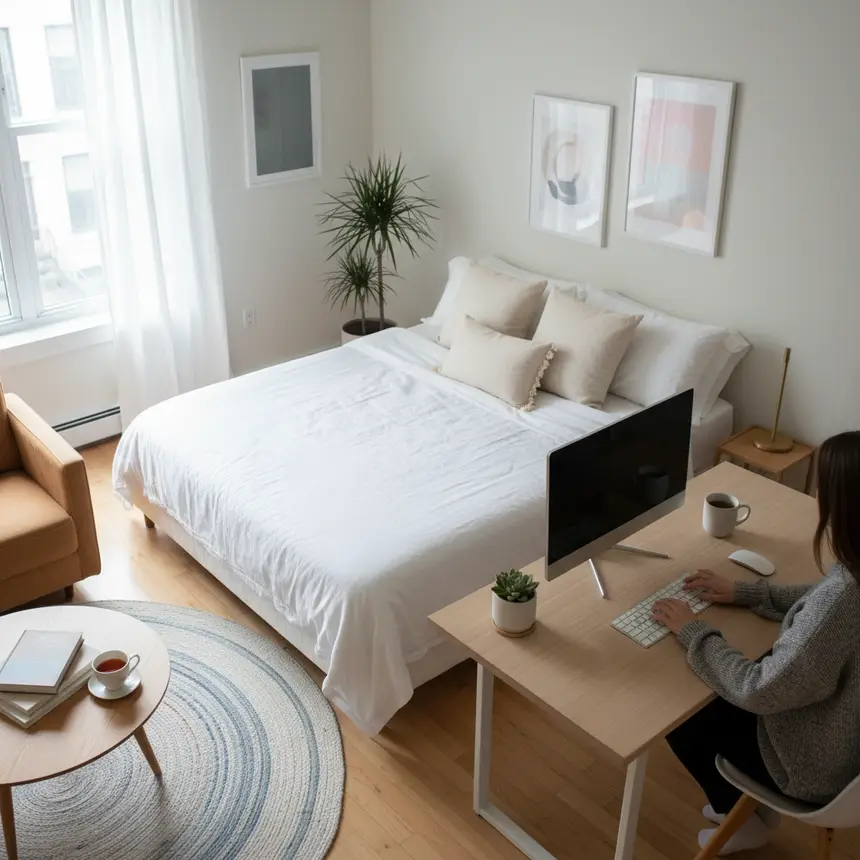
Tired of a cluttered living space? Effective home organization goes beyond tidying up; it's about transforming your spatial structure for efficiency. Discover practical tips to declutter your kitchen, utilize awkward spaces, and organize your wardrobe, creating a consistently pleasant solo living environment.

H2. The Solo Dweller's Dilemma: Why Your Space Always Ends Up Cluttered
Many who live alone share a common frustration: spending an entire weekend tidying up, even buying storage solutions, only to find the space in disarray a few days later. This isn't just about a lack of 'organizing skills.' More often, the root cause lies not in the 'items' themselves, but in the 'structure of the space' and the 'storage methods' used. Moving beyond simply tidying visible items, true and lasting home organization involves fundamentally changing your spatial structure. This article aims to help you break free from the endless cycle of decluttering and achieve sustainable tidiness in your solo apartment. Let's explore how transforming your space can genuinely enhance your quality of life, rather than just moving things around.

H2. The Chaos of Inefficient Space: Why Does My Home Get Messy Again So Quickly?
Why does your living area become disheveled so soon after you've just organized it? The primary reason often stems from inefficient space utilization and poor flow. You can easily spot 'dead spaces' in your home—think the end of a hallway, next to the refrigerator, or a neglected corner in the living room. These ambiguous areas are often left empty or become temporary resting spots for random items. Over time, however, they can quickly accumulate packages, unused gadgets, and various bits and bobs, turning into clutter hot spots. Furthermore, items lacking a designated 'home' frequently end up on floors or tabletops. This combination of poorly designed storage systems and neglected spaces is the main culprit behind the recurring chaos, making it crucial to address these inefficiencies for a truly comfortable solo living experience.
※ This post contains affiliate links. I may earn a commission at no extra cost to you.


H2. Three Core Strategies for Enduring Neatness in Your Home
To create a consistently tidy living environment, it's essential to look beyond just moving items and instead, strategically redesign your space. These three core strategies will significantly help transform your apartment from chaotic to orderly.
H3. Streamlining Your Kitchen for Seamless Living
The kitchen is often the busiest area in any home, accumulating the most items. If this space is disorganized, it can make the entire apartment feel untidy. The key is to create 'invisible storage solutions.' For instance, utilize slim pull-out pantries in the narrow gaps next to your refrigerator, or conceal small appliances like rice cookers in pull-out drawers behind cabinet doors. This ensures that even without constant tidying, the default state appears neat. Store bulk groceries or less frequently used dishware in upper cabinets, out of sight. Prioritize frequently used items in easily accessible spots at waist height, and place occasional-use items higher up or further back to optimize your workflow.
H3. Maximizing the Potential of Undervalued Corners
Solo apartments often feature what might be called 'awkward spaces'—the end of a hallway, a bare wall in the living room, or under a window. These 'dead' areas can be brought to life by installing custom-fitted storage units. For example, a built-in cabinet at the end of a hallway, precisely matched to its depth, can neatly store a vacuum cleaner, water bottles, and seasonal items. A custom cabinet along a living room wall can function as a stylish mini-bar or a cozy reading nook, adding both utility and aesthetic appeal. This approach goes beyond mere storage; it enhances the functionality of the space and contributes positively to your interior design.
H3. Transforming Wardrobe Chaos into Functional Order
If an overflowing wardrobe makes your room feel perpetually messy, reorganizing its internal structure is the solution. Begin by segmenting your closet: dedicate distinct areas for long garments, short garments, and secure upper storage for seasonal bedding or bulky items. This prevents clothes from getting jumbled and makes finding what you need effortless. For smaller rooms, sliding doors on your wardrobe can save valuable space compared to traditional swinging doors. Furthermore, choosing a wardrobe with a simple, clean design and minimal handles can create a visually calmer and more organized atmosphere, significantly impacting the overall feel of your room.
H3. Streamlining Your Kitchen for Seamless Living
The kitchen is often the busiest area in any home, accumulating the most items. If this space is disorganized, it can make the entire apartment feel untidy. The key is to create 'invisible storage solutions.' For instance, utilize slim pull-out pantries in the narrow gaps next to your refrigerator, or conceal small appliances like rice cookers in pull-out drawers behind cabinet doors. This ensures that even without constant tidying, the default state appears neat. Store bulk groceries or less frequently used dishware in upper cabinets, out of sight. Prioritize frequently used items in easily accessible spots at waist height, and place occasional-use items higher up or further back to optimize your workflow.
H3. Maximizing the Potential of Undervalued Corners
Solo apartments often feature what might be called 'awkward spaces'—the end of a hallway, a bare wall in the living room, or under a window. These 'dead' areas can be brought to life by installing custom-fitted storage units. For example, a built-in cabinet at the end of a hallway, precisely matched to its depth, can neatly store a vacuum cleaner, water bottles, and seasonal items. A custom cabinet along a living room wall can function as a stylish mini-bar or a cozy reading nook, adding both utility and aesthetic appeal. This approach goes beyond mere storage; it enhances the functionality of the space and contributes positively to your interior design.
H3. Transforming Wardrobe Chaos into Functional Order
If an overflowing wardrobe makes your room feel perpetually messy, reorganizing its internal structure is the solution. Begin by segmenting your closet: dedicate distinct areas for long garments, short garments, and secure upper storage for seasonal bedding or bulky items. This prevents clothes from getting jumbled and makes finding what you need effortless. For smaller rooms, sliding doors on your wardrobe can save valuable space compared to traditional swinging doors. Furthermore, choosing a wardrobe with a simple, clean design and minimal handles can create a visually calmer and more organized atmosphere, significantly impacting the overall feel of your room.

H2. Establishing Routines to Keep Your Space Consistently Tidy
Once your space has been transformed with structural changes, establishing daily routines to maintain that neatness becomes paramount. Make a habit of 'tidying as you go.' The small effort of putting items back in their designated spots immediately after use makes a significant difference. Simple routines like making your bed in the morning, washing dishes right after meals, or preparing your outfit for the next day in the evening can help uphold the order of your space. Consider dedicating 15 minutes once a week to clear your desk or organize any accumulating papers. Additionally, scheduling a 'mini-purge' once a month to declutter your wardrobe or kitchen cabinets helps prevent items from piling up again. These regular check-ins are crucial for sustained neatness. The key here is consistency, not perfection; small, repeated actions will build lasting tidy habits.

H2. The Enhanced Quality of Life a Tidy Space Offers
An organized living space offers more than just visual neatness; it positively impacts your overall quality of life. While a cluttered environment can induce stress, anxiety, and reduce focus, a well-ordered space fosters peace of mind and stability. You'll save precious time by easily finding what you need, allowing you to invest that time in personal activities or relaxation. Furthermore, a clean space can contribute to mental clarity and improved productivity. Organizing will transform from a tedious chore into a positive experience that enriches your life and grants you more freedom. Restructuring your space isn't just a short-term effort; it's a long-term investment that positively influences your life. Begin today to efficiently redesign your personal space and cultivate a more comfortable and joyful solo living experience.
Frequently Asked Questions
Q. My solo apartment is small and lacks storage. How should I organize it?
A. In small spaces, maximizing vertical space is crucial. Utilize wall shelves, slim organizers for narrow gaps, and under-bed drawers to free up floor space. Also, consider multi-functional furniture, like storage ottomans or folding tables, to efficiently use limited room.
Q. I find it difficult to declutter. Are there effective methods for letting go of items?
A. When decluttering, it helps to set clear criteria, such as 'discard anything not used in the past year.' Instead of vague thoughts like 'I might need this later,' ask yourself, 'Do I absolutely need this right now?' Making a habit of regularly decluttering small items can also be beneficial.
Q. What efforts are needed to maintain a clean space for a long time after organizing?
A. The most important principle is 'a place for everything, and everything in its place.' Develop the habit of returning items to their designated spot immediately after use, and dedicate at least 5 minutes to tidy up before bed each night. Creating a routine for weekly or monthly check-ups and decluttering specific areas is also very effective.
Q. I have too many clothes, and organizing my wardrobe feels overwhelming. Any tips?
A. Start by segmenting your wardrobe based on clothing type (tops, bottoms, outerwear) and length. Separate clothes by season, and use compression bags or dedicated storage bins for off-season or bulky items to save space. Grouping similar items together makes them easier to find and keeps your wardrobe looking neater.