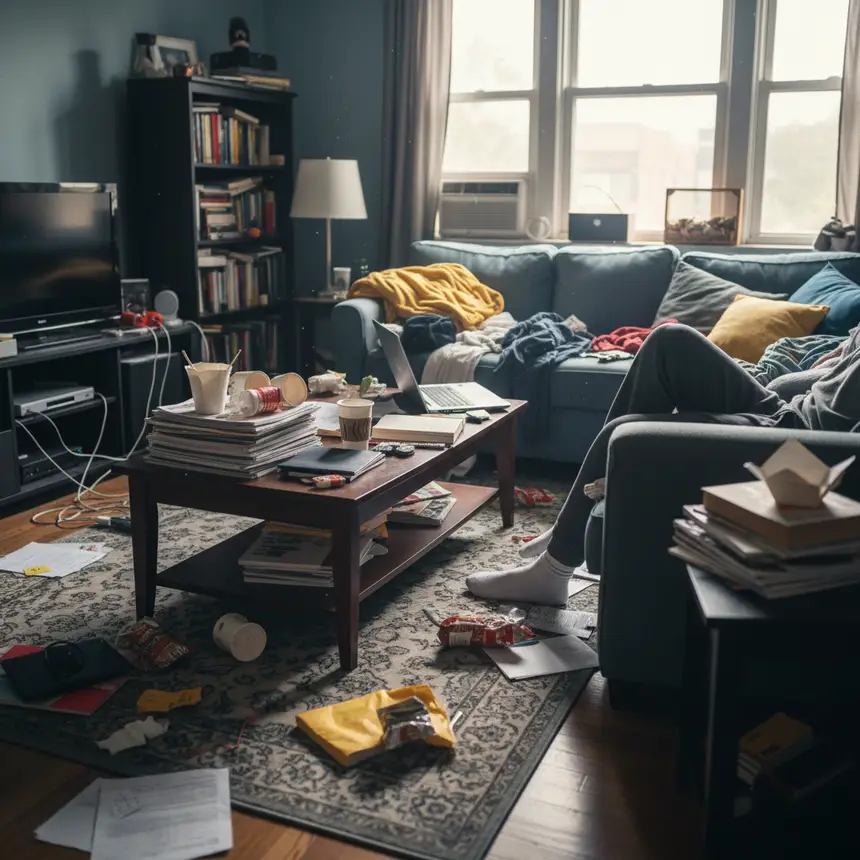
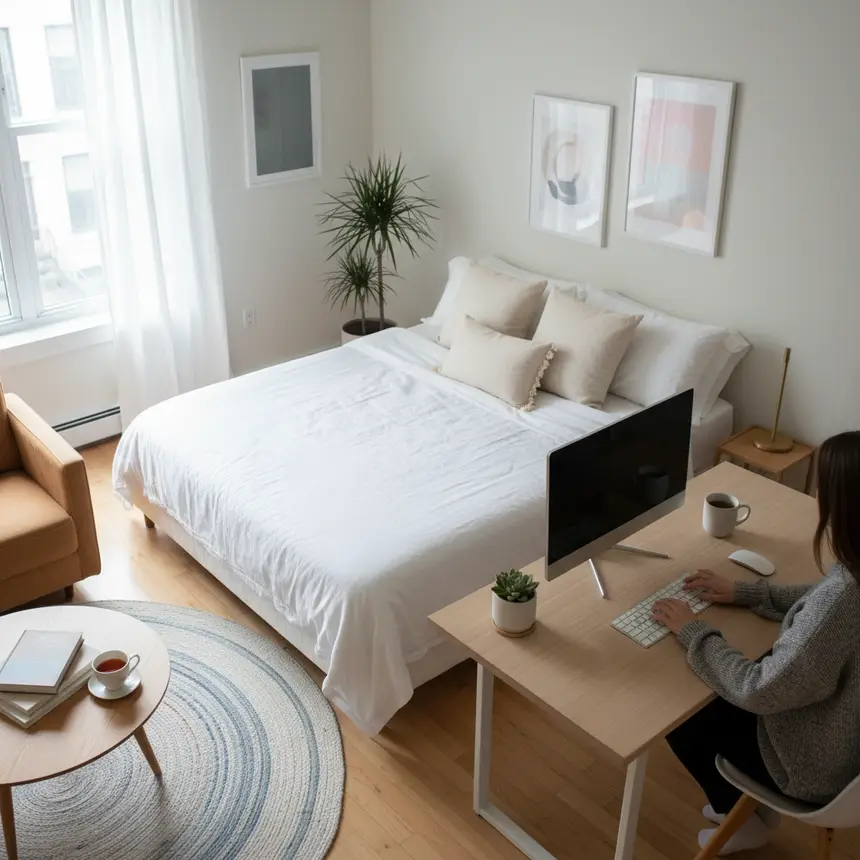
Tired of clutter in your studio? Go beyond surface cleaning with these fundamental strategies for efficient space utilization and sustainable home management. Transform your living area into a calm, organized sanctuary.

Why Does My Room Get Messy So Quickly, No Matter How Much I Clean?
It's a common dilemma for anyone living in a smaller space: you spend precious weekend hours meticulously tidying up, only for your apartment to revert to its chaotic state within days. The piles of delivered packages, clothes draped over chairs, and kitchen counters quickly disappearing under daily necessities create a disheartening cycle. This isn't usually a failure of willpower or effort. Instead, the true culprit often lies in the underlying 'structure' of your space and how items are stored, rather than the items themselves. Simply moving things around provides only temporary relief. For lasting order and a sense of calm, we need to shift our focus from constant tidying to intelligent spatial redesign. It's time to stop fighting the clutter and start creating an environment where organization is effortless and inherent.

Strategic Pillars for Maximizing Every Inch of Your Home
The kitchen, often the busiest hub of any home, significantly influences the overall neatness of your living space. Small appliances, grocery deliveries, and everyday essentials can quickly accumulate around the refrigerator or on countertops, making the entire area feel chaotic. The initial step to lasting order is to systematically rethink this central zone. Consider integrating custom storage solutions around major appliances, like pull-out pantries next to the fridge, or cleverly concealed cabinets that hide frequently used kitchen gadgets behind sleek doors. This concept of 'invisible storage' is key to maintaining a visually uncluttered aesthetic. Beyond the kitchen, don't overlook those often-ignored nooks and crannies—the end of a hallway, a narrow wall in the living room, or the space adjacent to a tall piece of furniture. These awkward spots are magnets for miscellaneous items over time. Transforming them with purpose-built, slender storage units or multi-functional furniture can provide dedicated homes for bulkier items like cleaning supplies, seasonal decor, or even a stack of bottled water. Always prioritize accessibility: items you use daily should be within easy reach at waist height, while less frequently accessed goods can be stored higher up. This structural approach not only eliminates clutter but also enhances daily functionality and contributes to a more appealing home environment.
※ This post contains affiliate links. I may earn a commission at no extra cost to you.


Cultivating Order: Practical Routines for Sustainable Neatness
Many assume a messy room is simply due to owning too many clothes. However, the true challenge often lies in how those garments are stored. The internal organization of your wardrobe can profoundly impact your room's ambiance and the ease of maintaining order. Rather than stuffing long dresses, casual tops, bedding, and accessories haphazardly together, allocate specific zones for each category. For instance, designate a dedicated section for full-length garments, and use drawer dividers or custom shelving for folded items like sweaters and t-shirts, making them easily accessible. Out-of-season linens or infrequently used bags can find their home in higher, less accessible shelves. For compact spaces, sliding wardrobe doors are a smart choice, optimizing floor space by eliminating the need for outward-swinging doors. Furthermore, opting for a clean, minimalist exterior design and neutral colors for your wardrobe furniture can contribute significantly to the room's overall sense of calm. By viewing your wardrobe not just as a storage unit, but as an integrated organizational system, you can dramatically reduce the time spent searching for items and tidying up, transforming your entire living area into a more serene and organized haven.

Beyond Daily Chores: The Enduring Impact of Structural Organization
The persistent struggle with clutter, despite numerous attempts to tidy, is rarely a reflection of your personal diligence. More often, it's a symptom of a space designed without your lifestyle in mind—an environment inherently prone to disarray. The key isn't to constantly battle the mess, but to invest in a 'system' that sustains order long-term. By strategically designing storage solutions for your kitchen, repurposing every overlooked nook, and optimizing your personal wardrobe, you empower your space to maintain its neatness with minimal daily effort. Shift your perspective from seeing home organization as an endless chore to viewing it as a thoughtful investment in your daily well-being. These structural enhancements, starting with small, deliberate changes, can bring an unexpected sense of calm and efficiency to your everyday life. Embrace this journey to redefine your living space and discover the profound impact it has on your overall sense of peace and comfort.
Frequently Asked Questions
Q. My studio is small. Won't adding more storage make it feel even more cramped?
A. For compact spaces, the focus should be on utilizing vertical and deep storage solutions rather than expanding floor footprint. Wall-mounted shelves, slim cabinets that fit into narrow gaps, or custom built-ins can maximize storage efficiency without making the room feel smaller.
Q. I'm too busy to stick to complicated organizing routines. How can I manage?
A. The strategies suggested here prioritize 'one-time structural improvements' over daily complex routines. Once your space is thoughtfully designed for organization, maintaining its tidiness requires minimal ongoing effort, saving you time in the long run.
Q. Which area should I start organizing to see the quickest results?
A. It's often most impactful to begin with high-traffic areas like the kitchen or your wardrobe, as these tend to accumulate the most items and impact daily flow. A well-organized kitchen, in particular, can make the entire home feel significantly tidier.