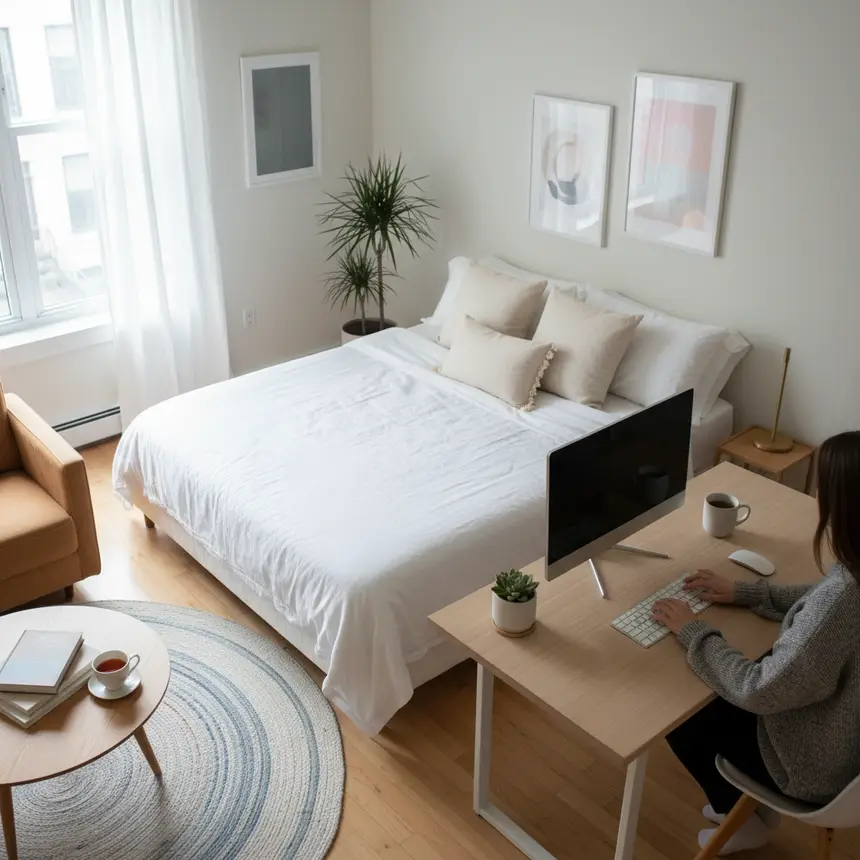
Are late nights and a chaotic daily routine draining your energy in your single life?
Discover practical strategies to manage your lifestyle and bring vitality back to your home.

When Your Day Starts After Noon: The Single-Life Struggle
It’s 2 PM, and the sun is high, yet you’re just opening your eyes, feeling like half your day has already vanished. Sound familiar? For many living alone, a weekend (or even a weekday) often blurs into an unstructured cycle of late nights, late mornings, skipped meals, and mounting chores. What might start as a temporary break can quickly spiral into a prolonged period of disrupted daily patterns. This disoriented routine can drain your energy, making your single-living experience feel sluggish and uninspired. Take a moment to reflect: are your mornings consistently starting much later than you’d like? How you kick off and wind down your day significantly influences your overall well-being and productivity.

The Hidden Costs of a Disrupted Daily Cycle
An inconsistent sleep schedule and a chaotic daily routine do more than just make you feel tired; they can have a profound negative impact on various aspects of your life. Waking up groggy and staying mentally foggy throughout the day can decrease your focus and productivity, leading to procrastination and a lack of accomplishment. Physically, you might experience digestive issues or a weakened immune system. Mentally, feelings of apathy, low mood, or anxiety can become more prevalent. Furthermore, a lack of routine can make you less inclined to engage socially, potentially affecting your relationships. This breakdown in lifestyle management significantly reduces the quality of your single-living experience. If you’re constantly feeling fatigued or unmotivated, your irregular patterns might be the silent culprit. Recognizing these effects is the first step toward creating a positive change.
※ This post contains affiliate links. I may earn a commission at no extra cost to you.


Transforming Your Space to Reset Your Lifestyle
To effectively restore a disrupted daily routine, it's incredibly helpful to start by transforming your immediate physical environment. A clean and organized space offers a sense of calm and can be a powerful catalyst for forming consistent habits. Begin with small actions: make your bed and air out your bedroom as soon as you wake up. These simple gestures serve as positive cues to kickstart your day. Next, aim to designate your bedroom primarily for sleep, and keep your activity areas consistently tidy. Adopt a minimalist approach by reducing clutter and ensuring everything has its rightful place. For instance, hang clothes immediately after wearing them and put items away as soon as you're done using them. A decluttered space can lead to a clearer mind, preparing you to embrace new, more structured daily patterns.

Step-by-Step: Building a Brighter Daily Routine
Correcting an irregular daily routine requires a systematic approach, starting with small, achievable goals rather than attempting an overhaul.
- 1. Establish a Sleep Routine: Aim to go to bed and wake up at roughly the same time each day, even on weekends. Consistency is key. While challenging at first, gradually adjust your times in 30-minute increments to help your body adapt.
- 2. Set Small Organization Goals: Try dedicating just 10 minutes daily to tidying a specific area, or committing to one bathroom clean per week. These manageable tasks build a foundation for self-management beyond just physical space.
- 3. Integrate Positive Activities: Open your curtains to let in natural light, or take a short, brisk walk around your neighborhood first thing in the morning. Engaging in physical activity boosts energy and improves mood. Why not set a goal this week to move your bedtime up by 30 minutes and consistently stick with it?

Embrace Progress, Not Perfection: Your Journey to a Balanced Life
The journey to rectify a disrupted daily routine is rarely a straight path. The key isn't perfection, but rather consistency and resilience. There will be days when you might fall off track or miss your goals, and that’s perfectly normal. What truly matters is the willingness to pick yourself up and start again. Approach each day with the mindset of making incremental improvements to your single-living experience. By organizing your space and gradually building positive habits, you empower yourself with stronger lifestyle management skills. These collective efforts will ultimately lead to a more vibrant and fulfilling life lived on your own terms. Take the first step today by committing to just one new habit. It could be the beginning of your brightest chapter yet.
Frequently Asked Questions
Q. What's the very first step to fixing an irregular daily routine?
A. The most crucial first step is to set a consistent sleep schedule. Aiming to go to bed and wake up at similar times each day forms the foundational core for stabilizing your entire routine.
Q. Can organizing my living space really help with my daily routine?
A. Yes, absolutely. A clean and organized space provides a sense of psychological calm and boosts motivation for daily activities. Specifically, designating your bedroom primarily for sleep can significantly improve sleep quality.
Q. I find it hard to stick to new habits consistently. Any advice?
A. Instead of setting overly ambitious goals, start with small, achievable ones like '10 minutes of tidying daily' or 'going to bed 30 minutes earlier.' Attainable goals build confidence and provide the motivation to continue. Focus on consistency over perfection.
Q. I struggle to wake up in the morning. How can I overcome this?
A. Establish a solid sleep routine and try to reduce screen time before bed. In the morning, don't rely solely on an alarm; open your curtains to let in natural light or do some light stretching to gently wake your body.